
- Course
Introduction to Dates, Times and Intervals in Oracle
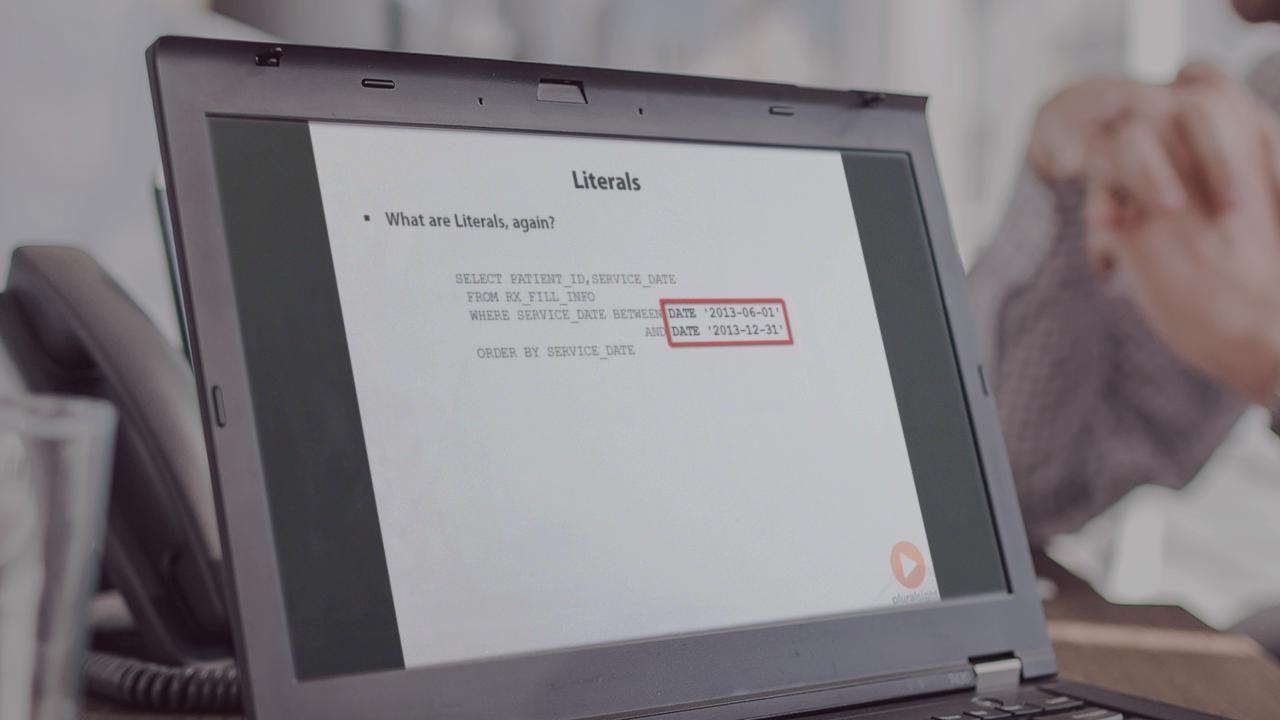
The Introduction to Dates, Time and Intervals in Oracle course details how to use the DATE, TIMESTAMP and INTERVAL data types as well as the many date- and time-related functions available to the SQL programmer.
Beginner
- Course
Introduction to Dates, Times and Intervals in Oracle
The Introduction to Dates, Time and Intervals in Oracle course details how to use the DATE, TIMESTAMP and INTERVAL data types as well as the many date- and time-related functions available to the SQL programmer.
Beginner
Get started today
Access this course and other top-rated tech content with one of our business plans.
Try this course for free
Access this course and other top-rated tech content with one of our individual plans.
This course is included in the libraries shown below:
- Data
What you'll learn
The Introduction to Dates, Time and Intervals in Oracle course details how to use the DATE, TIMESTAMP and INTERVAL data types as well as the many date- and time-related functions available to the SQL programmer such as TO_DATE(), TO_CHAR(), MONTHS_BETWEEN(), as well as many others.
Introduction to Dates, Times and Intervals in Oracle
Beginner
Table of contents


Scott is a statistical computer programmer specializing in SAS and SQL. An admitted dilettante, Scott occupies his time learning various programming languages such as Java, Android, C#, C, PL/SQL, R, SPSS, to name a few. Scott becomes visibly upset if you don't line up your code syntax!
