
- Course
Getting Started with FPGA Programming with VHDL
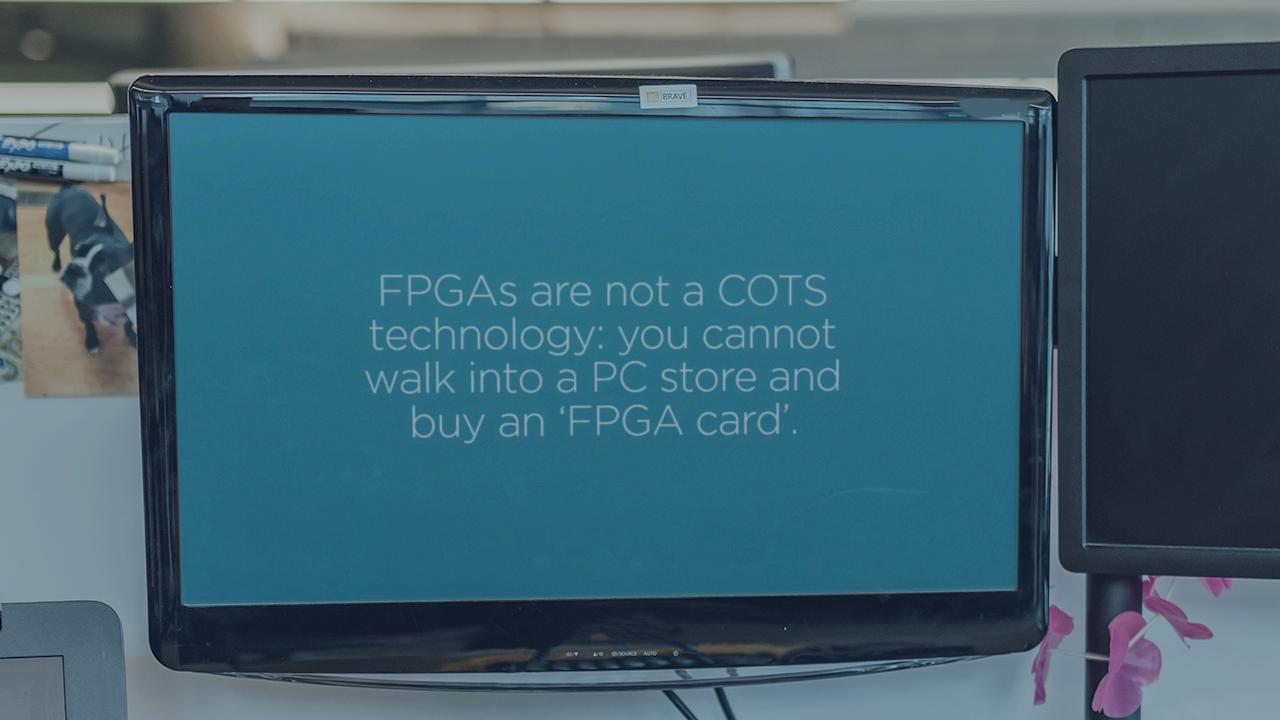
Field Programmable Gate Arrays are a technology that sits between general-purpose microprocessors and fixed-structure Application Specific Integrated Circuits, and you can build almost anything with them. This course will teach you how.
Beginner
- Course
Getting Started with FPGA Programming with VHDL
Field Programmable Gate Arrays are a technology that sits between general-purpose microprocessors and fixed-structure Application Specific Integrated Circuits, and you can build almost anything with them. This course will teach you how.
Beginner
Get started today
Access this course and other top-rated tech content with one of our business plans.
Try this course for free
Access this course and other top-rated tech content with one of our individual plans.
This course is included in the libraries shown below:
- Core Tech
What you'll learn
Field Programmable Gate Array (FPGA)s provide both the ability to effectively design your own processor to perform a specific task yet, at the same time, allow for later reprogramming the processor in the field. FPGAs are used across many industries, from home automation to financial engineering, aerospace and many others. While this all sounds deadly serious, it's important to understand that working with FPGAs can also be quite fun. You can think of them as the world's fastest set of Lego blocks. What you can build with an FPGA is mostly limited only by your imagination. In this course, Getting Started with FPGA Programming with VHDL, you'll first learn an overview of FPGA architecture. Next, you'll learn the fundamentals of VHDL programming language. Finally, you'll wrap up the course by learning about debugging and analysis. You'll look at how to create configurations, define signals and triggers to monitor, configure signals, and recompile to embed the logic analyzer in the design. By the end of this course, you'll have a strong foundation of FPGA programming with the VHDL language to use in your own work.
Getting Started with FPGA Programming with VHDL
Beginner


Dmitri is a developer, speaker, podcaster, technical evangelist and wannabe quant.
