
- Course
Building a Raspberry Pi 4 Kubernetes Cluster
This course will teach you how to make a Kubernetes cluster from a few Raspberry Pis, while boosting your Kubernetes skills set.
Intermediate
- Course
Building a Raspberry Pi 4 Kubernetes Cluster
This course will teach you how to make a Kubernetes cluster from a few Raspberry Pis, while boosting your Kubernetes skills set.
Intermediate
Get started today
Access this course and other top-rated tech content with one of our business plans.
Try this course for free
Access this course and other top-rated tech content with one of our individual plans.
This course is included in the libraries shown below:
- Core Tech
What you'll learn
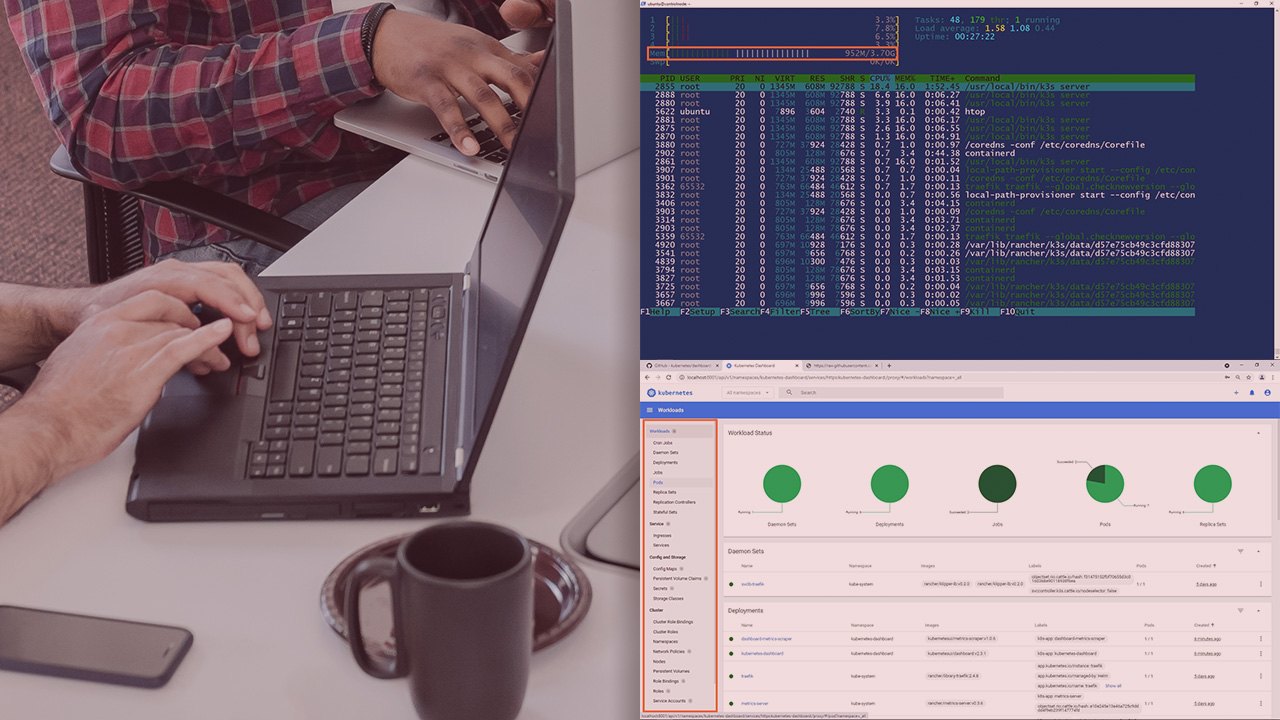
Kubernetes has many moving parts which are hard to master. In this course, Building a Raspberry Pi Kubernetes Cluster, you will learn how to set up a Kubernetes cluster on a few Raspberry Pis. First, you will prepare the hardware, then install and configure a Raspberry Pi. Next, you will install K3s, a lightweight Kubernetes distribution, on the Pi. Afterwards, you will learn how to join more Pis to the cluster. Finally, you will learn how to deploy various web applications to the Kubernetes cluster. By taking this course, you will have the skills to set up your own Kubernetes cluster on a few Raspberry Pis.
Building a Raspberry Pi 4 Kubernetes Cluster
Intermediate
Table of contents


As a software engineer and lifelong learner, Dan wrote a PhD thesis and many highly-cited publications on decision making and knowledge acquisition in software architecture. Dan used Microsoft technologies for many years, but moved gradually to Python, Linux and AWS to gain different perspectives of the computing world.
